


No products in the basket.
No products in the basket.
Middle East fertilizer shock for African farmers
Ongoing hostilities in the Middle East are severely affecting Africa’s agricultural sector.
By Leon Louw founder of WhyAfrica and Endorphin Expeditions
According to the International Fertilizer Development Centre (IFDC) average fertilizer free on board (FOB) prices have surged, with urea increasing by 37%.
The IFDC says in a statement that major Middle Eastern fertilizer suppliers have halted operations and cancelled supply contracts amid continued uncertainty.
Fertilizers are critical
Fertilizers are important to agricultural productivity, production, and global food security.
Demand for fertilizers follows planting calendars that do not adjust to geopolitical instability. Disruptions in their supply generate knock-on effects on food systems.
A shortage of fertilizer leads to nutrient-deficient soils and lower crop yields, which diminish food supply and inflate consumer food prices.
Fertilizer exports
According to the IFDC the Middle East accounts for a significant share of global fertilizer exports, with five major exporting countries (Bahrain, Iran, Qatar, Saudi Arabia, and United Arab Emirates) relying on the Strait of Hormuz to transit products to international markets.
In 2024, these countries collectively accounted for about 34% of global urea trade, 18% of global monoammonium phosphate (MAP) and diammonium phosphate (DAP) trade, and 23% of global ammonia trade (source: IFDC).
Africa the big loser
The disruption in production and shipping routes, including higher freight and insurance costs, has already placed additional pressure on global fertilizer supply chains and increased the risk of shortages
Data from AfricaFertilizer show that between 2020 and 2022, 19% of fertilizers imported into 18 sub-Saharan African countries came from Middle Eastern countries, highlighting the importance of this region for Africa’s fertilizer supply.
Effective fertilizer use depends on the timing, predictability, and coordination of supply, since crops require nutrients at specific growth stages to achieve optimal yields.
Delays affect outcomes
As most countries in sub-Saharan Africa, particularly in West Africa, prepare for the March/April planting season and those in East Africa around June, fertilizers must already be in-country or in transit to importers.
Any delay at this stage directly affects planting decisions and harvest outcomes.
Africa remains highly dependent on imported inorganic fertilizers, a structural vulnerability that continues to expose the continent to global geopolitical shocks.
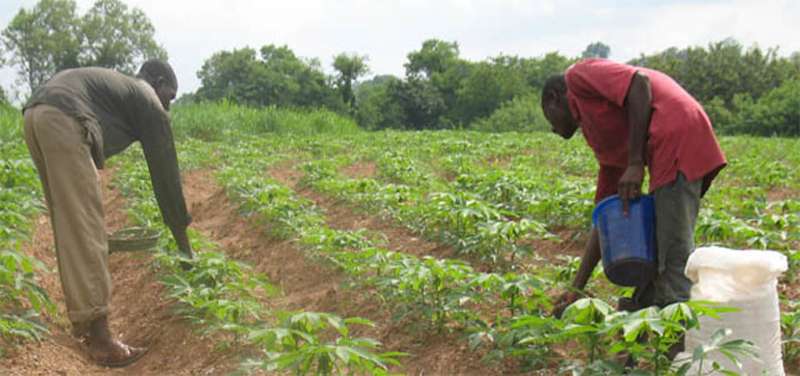
Image: Farmers applying fertilizer to cassava. Image credit: Flickr
Middle East fertilizer shock for African farmers
WhyAfrica provides on the ground information and business intelligence about the sustainable utilisation and extraction of natural resources in Africa. Read More


© 2024 Why Africa. All Rights Reserved.